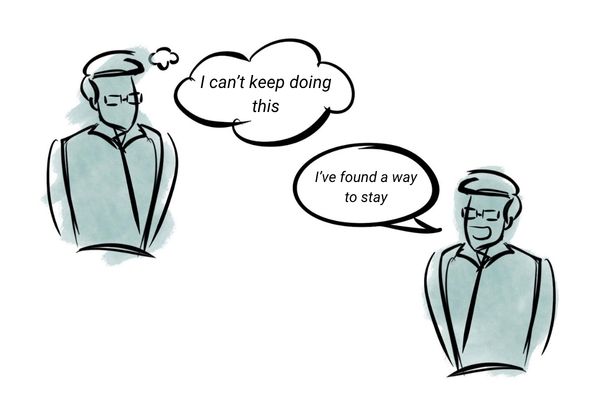
From teacher burnout to finding a way to stay
What was keeping Tom stuck?
Tom was a teacher who genuinely loved making a difference. He cared deeply about his pupils, supported colleagues willingly and was always prepared to go the extra mile.
Over time, however, his workload had become unsustainable. Alongside teaching, he was managing SEND responsibilities, supporting an Early Career Teacher and taking on additional leadership tasks that didn't feel like a natural fit. He regularly worked through lunch, took work home most evenings and struggled to switch off mentally.
Having experienced burnout previously, Tom recognised the warning signs. He felt guilty about asking for support and often prioritised everyone else's needs above his own, leaving little energy for himself or his family.
What did Tom discover about himself?
Tom realised that many of the qualities that made him an excellent teacher and colleague — being dependable, hardworking and always willing to help — had gradually become the very things that were draining his energy.
Together, we explored how he could continue supporting others without carrying responsibility for everything. He began to recognise that setting boundaries wasn't letting people down; it was what allowed him to teach and lead consistently over the long term.
As his self-awareness grew, Tom became less reliant on external reassurance and more confident in trusting his own judgement. He also discovered that managing his energy was every bit as important as managing his diary.
What became possible because of that?
Tom developed clearer boundaries around his workload, created practical strategies for protecting his time and stopped carrying work with him long after the school day had ended.
He began sleeping better, found it easier to switch off in the evenings and rediscovered enjoyment in both his work and his home life.
Most importantly, Tom no longer believed that being a good colleague and leader meant constantly putting himself last. By creating a more sustainable way of working, he was able to remain in a role he loved while protecting both his wellbeing and his long-term effectiveness as a leader.